
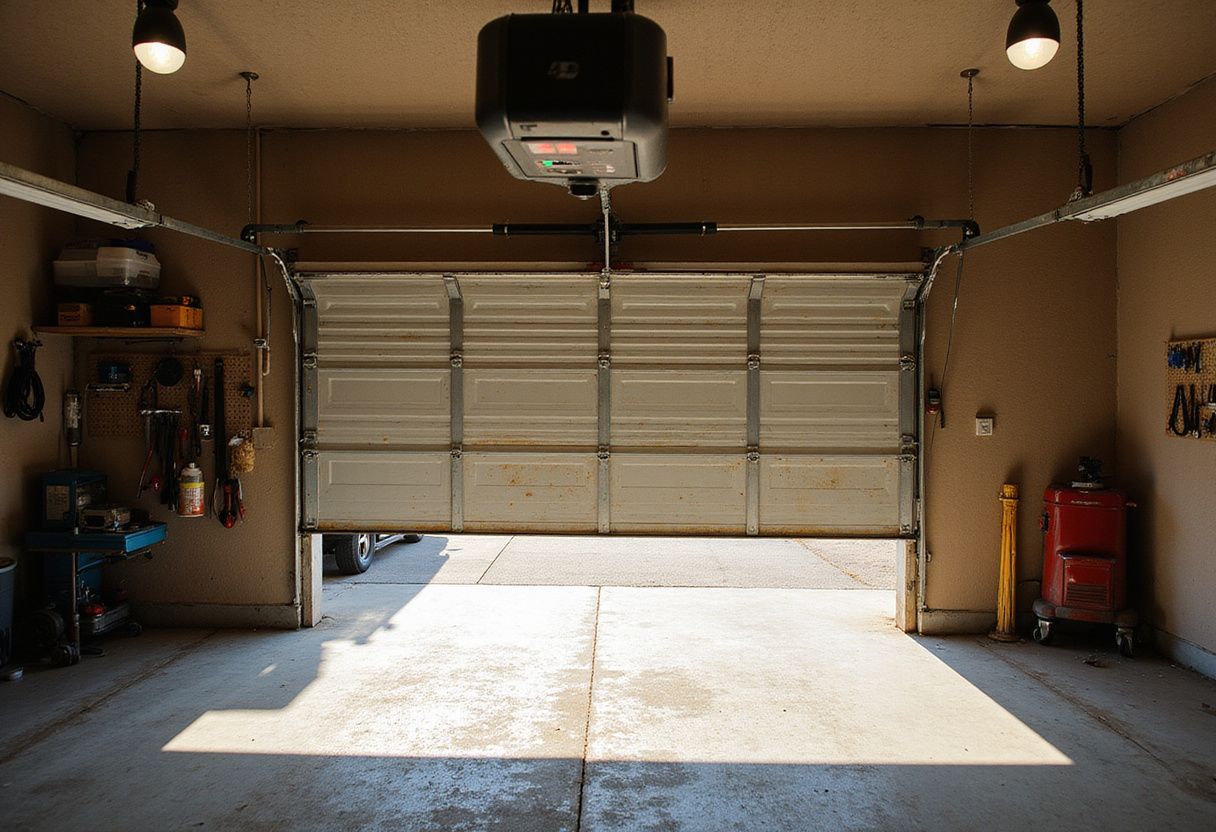
A garage door that starts to close and then stops can wreck your morning. In our repair work, we often see opener flash codes, where one flash usually means a broken sensor, and that often points to the trouble. This guide walks you through how we check the opener, safety sensors, logic board, limit switch, tracks, and springs. We also show when it makes sense to call a pro so you avoid a wasted trip. Read on and you can fix it fast.
Check the Sensors for Misalignment or Dirt
We inspect the photo-eye sensors first, as they block the door if the beam sees an obstacle. We look for dirt on the sensor lenses and on the garage door track area. We use a soft cloth to wipe grime from both the lenses and the rollers, and we note that blocked sensors will stop the door from closing. We observe the opener lights and consult the garage door opener manual for error codes. Four flashes often mean misaligned safety sensors, and blinking lights during a close attempt point to a sensor fault. We turn off power to the opener before we adjust any parts, unplugging the unit or switching off the circuit to avoid shock while handling the sensors and opener board.
We loosen the sensor mounting screws gently and use a level or a straightedge and a taut string between the sensors to realign them until the beams aim directly at each other. We test the beam after realignment by pressing the remote or wall control and watching the door start to close, letting it complete the cycle to confirm the fix. We inspect sensor wiring and connector pins for corrosion or loose wires, and we use a multimeter to verify continuity if we suspect a broken lead near the opener logic board.
We clean debris from the door threshold, the garage door track, and the sensor area. We keep torsion and extension springs away from the work zone and avoid touching worn springs or the garage springs assembly. Dirty or misaligned sensors can falsely trigger safety mechanisms and stop a closing door. If cleaning and alignment fail, contact Superior Overhead Doors for precision garage door service and repairs Online resources like our website, browser pages, and social media accounts list service options, while online advertising and cookies policy pages explain how we connect with customers for technical assistance.
Inspect the Garage Door Springs
Inspecting the garage door springs is crucial for safe operation. These springs counterbalance the weight of the door, which helps it open and close properly. If you hear unusual noises or feel resistance when moving the door manually, it could signal spring issues. Visible signs like cracks, rust, or gaps often indicate wear, and a sagging or unexpectedly slamming door typically shows trouble with the springs.
Worn or broken springs prevent your garage door from closing fully. The tension imbalance can cause it to stop mid-way during closure. Dealing with high-tension parts poses major safety risks, making it important to hire a professional for an inspection when problems arise. Regular garage door maintenance includes checking these vital components to ensure smooth functionality and avoid further damage down the line.
Test the Limit Switch Settings
It is important to ensure the limit switch settings are correct. These settings control the motor’s operation and monitor the garage door’s open and close positions. Locate the limit switches on your garage door opener by checking for two knobs at the top and bottom of the opener rail or screws near the motor unit. Adjust the limits to see if it resolves issues with premature stopping or incomplete closing of the garage door. Rotate each knob slowly, making slight adjustments in either direction, as small changes can make a big difference in functionality.
Observe how your garage door operates after each adjustment, watching for smooth movement until it fully opens or closes. Perform a basic visual inspection around the limit switch area to look for visible damage, broken wires, or loose connections that might affect performance. Consult your owner’s manual for specific instructions on adjusting limit switches if needed, which provides valuable guidance tailored to your door model.
Take extra care when making adjustments to avoid misconfiguration that could lead to further problems. Ask a professional technician for help if you feel unsure about any part of this process, as their expertise could save you from unnecessary hassle. Testing and adjusting limit switch settings is crucial to maintaining your garage door’s function efficiently and safely with Superior Overhead Doors.
Ensure the Garage Door Tracks Are Clear and Aligned
We must keep the garage door tracks clean and aligned since this maintenance step plays a crucial role in the smooth operation of your garage door. Regularly inspect the tracks for dirt, dust, or other debris, as build-up can impact how the garage door moves. Use a vacuum to remove loose debris from the tracks to help maintain optimal functionality. Wipe down the tracks with a clean cloth to eliminate any remaining residue and ensure better performance. Apply garage door lubricant along the tracks once cleaned, as proper lubrication minimizes friction and allows for a smoother operation.
Inspect the tracks visually to confirm they are parallel and straight. Misalignment can cause the garage door to stop unexpectedly, so adjust any misaligned tracks you may find during inspection. This adjustment is vital for preventing future issues with the door movement. Well-maintained tracks guide the door effectively, preventing improper closure and enhancing safety. Professional technicians can assist in leveling your garage door if necessary to ensure balanced weight on both sides for easier movement. Keep in mind that neglecting track maintenance can lead to bigger problems in the future, meaning regular checks are essential to avoid complications.
Adjust the Travel or Force Settings if Necessary
Adjusting the travel or force settings can resolve issues with your garage door stopping unexpectedly. Incorrect force settings often cause the door to halt if it detects resistance. Locate the knobs or dials on the garage door opener unit, which adjust both travel and force settings. Consult the owner’s manual for specific instructions regarding your garage door model, as each model may have unique adjustment procedures. Turn the force adjustment dial to increase or decrease the minimum pressure required for closing to help prevent unnecessary stops.
Test the adjustments by operating the garage door after each change to ensure that it closes smoothly without interruption. Repeat the process until you find a suitable setting that allows your garage door to function correctly. Always prioritize safety while making these adjustments by keeping your hands and tools clear of any moving parts during operation. If you encounter persistent issues, consider seeking professional assistance to avoid potential damage or safety hazards. Regularly check and maintain these settings as part of your garage door upkeep routine to ensure reliable performance.
Benefits of Hiring a Professional Technician
We understand the value of professional help for garage door issues. Professionals can quickly and accurately diagnose malfunctions, targeting the root cause directly. This expertise saves customers from wasting energy on complex DIY attempts that may lead nowhere.
Hiring experts like Superior Overhead Doors ensures the safe handling of springs and tracks, which pose serious safety risks when under tension or heavy weight. Skilled technicians perform repairs correctly and protect your warranties from being voided. You gain peace of mind knowing that our team follows industry standards to avoid further property damage while getting the job done right.
Conclusion
When your garage door starts to close and then suddenly stops, it can be frustrating. You must first troubleshoot the opener and check for sensor issues. If the sensors are dirty or misaligned, cleaning them resolves many problems. Examining the springs and tracks ensures they perform well too. For more complex issues, seeking a professional technician helps you avoid further complications and guarantees effective repairs.