
You press a button, and your garage door just works. It feels like simple magic, going up and down every day without a second thought. But behind that large overhead door is a system of many garage door parts working in harmony to lift and lower hundreds of pounds.
Understanding these different garage door parts is beneficial for any homeowner living in Apex, NC, and beyond. Knowing the components helps you identify potential problems and understand when maintenance is needed. It also allows you to have a more informed conversation if you need to call a professional for a garage door repair.
How Your Garage Door Works
Your garage door isn’t one solid piece that lifts straight up. It’s made of several horizontal panels connected by hinges. These connections allow the door to bend and follow a track as it moves from a vertical, closed position to a horizontal, open position along the ceiling.
The heavy lifting isn’t performed by the garage door motor alone. In fact, a powerful garage door spring system does most of the work by counterbalancing the door’s weight. A quality spring makes the door feel light enough for a person to lift by hand or for a small motor to move with ease.
The garage door opener is the control system. It provides the initial force to get the door moving, but the real power comes from the springs, which make the whole operation possible day after day.
Guide to Garage Door Parts
Many different components have to work perfectly for your door to open smoothly. From the visible panels to the hidden springs, each part has a specific function. Let’s look at the main players that make up your complete garage door system.
Panels and Hinges
The large sections you see from the street are called panels. They can be made from steel, aluminum, wood, or composite materials and come in many styles. Connecting these panels are strong door hinges, which are a critical piece of garage door hardware.
These garage door hinges allow the panels to articulate as the door moves along its curved track. You can also find decorative hardware to add style to your door’s exterior. This hardware can mimic the look of old carriage house doors without changing the door’s function.
Tracks and Rollers
On the sides of your door, you’ll find metal tracks that guide the door’s movement. These tracks hold the garage door rollers, which are small wheels that allow the door to glide smoothly up and down. Rollers can be made of steel or nylon, with nylon rollers often providing quieter operation.
The entire track system is supported by brackets and fixtures attached to the wall and ceiling. At the top of the system, bearing plates hold the torsion tube in place. A center bearing often supports the middle of the tube, preventing it from sagging over time.
The Spring System (the Muscle)
This is the most powerful and important part of the garage door assembly. Your system will use one of two main types of door springs. It’s important to know which one you have, as they work differently.
A garage door torsion spring is a large, coiled spring mounted on a metal tube above the door opening. As the door closes, cables turn the tube, which winds the garage door torsion springs and stores powerful energy. When the door opens, this energy is released to lift the heavy weight.
The other type is the garage door extension spring system. These door extension springs run along the sides of the upper tracks, parallel to the ceiling. They stretch and pull to provide the lifting force needed, working much like a large rubber band.
Cables and Cable Drums
Working directly with the spring system are high-tension steel cables. On a torsion system, the cables are attached to the bottom corners of the door and wind around grooved cable drums at the ends of the torsion tube. This mechanism ensures the door lifts evenly on both sides.
On an extension spring system, cables run from the bottom brackets up to the springs. These cable assemblies are crucial for transferring the lifting force from the springs to the door. If a cable snaps, the door will become crooked and may get stuck.
The Garage Door Opener (the Brains)
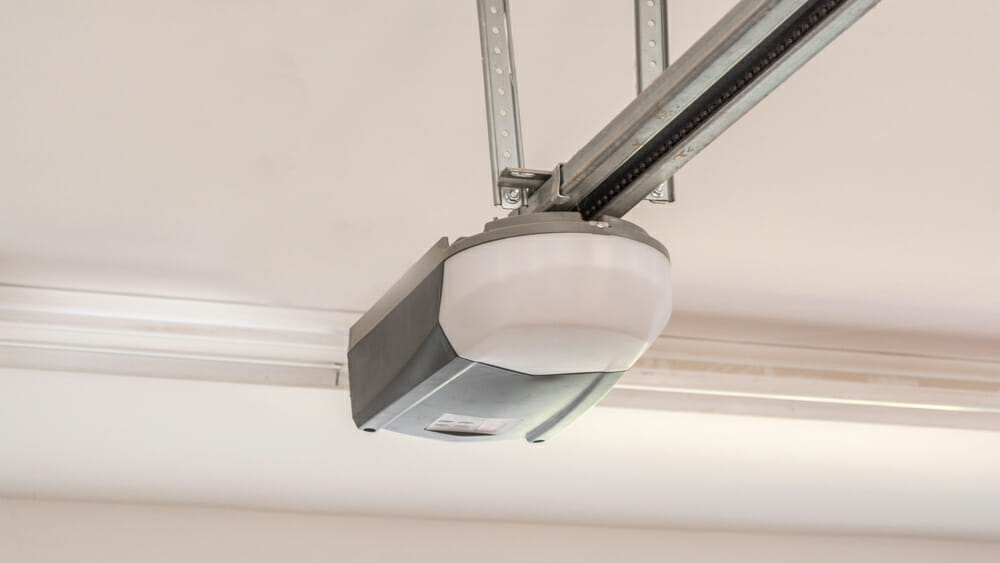
The motorized unit on your garage ceiling is the garage door opener. This device gets a signal from your remote control or wall console and activates the motor. Common brands you might see include LiftMaster, Genie, and Wayne Dalton models.
There are several types of door openers, including chain-drive, belt-drive, and wall mount operators. The opener’s circuit board acts as its brain, processing commands and controlling safety features. If your opener malfunctions, you might need replacement operator parts.
Accessories such as a remote control, keyless entry pad, and wall consoles make using your door convenient. You can find universal remotes that work with multiple brands or specific remotes for your unit. The opener assembly also includes opener brackets to connect it to the door and limit switches to tell it when to stop.
Essential Safety Features
Modern garage doors are equipped with important safety features. A pair of photo-eye sensors is mounted near the floor on each side of the door opening. They project an invisible beam of light across the path of the door.
If a person, pet, or object breaks this beam while the door is closing, the opener will automatically reverse its direction. Another vital feature is the red emergency release cord hanging from the opener assembly. Pulling this cord detaches the door from the opener, allowing you to operate it manually during a power outage.
Weather Seal
Along the bottom edge of your garage door is a flexible strip of rubber or vinyl, known as the door seal. This bottom seal helps keep rain, snow, dirt, and pests from entering your garage. It provides a cushion when the door closes and protects the bottom panel.
Proper door seals are also important for insulation, preventing drafts and improving your home’s energy efficiency. Some garages, including those for a mini warehouse, benefit from additional weatherstripping around the sides and top of the door frame. In all, a good seal protects the contents of your garage from the elements.
Keeping Your Door in Good Shape
You don’t need to be an expert to perform basic maintenance. A little regular upkeep can go a long way in preventing major issues and extending the life of your garage door parts. Spending just a few minutes every few months can make a big difference.
Use a cloth to wipe down the tracks and remove any debris, but avoid using grease, which can attract more grime. You can lubricate metal hinges, rollers, and springs with a proper garage door lubricant. Also, regularly test the auto-reverse safety feature by placing a 2×4 board on the floor in the door’s path.
The following table breaks down a simple maintenance schedule.
| Part | Maintenance Task | Frequency |
|---|---|---|
| Safety Sensors | Wipe lenses and test auto-reverse function. | Monthly |
| Rollers and Hinges | Apply a garage door lubricant. | Quarterly |
| Tracks | Wipe clean with a damp cloth. | Quarterly |
| Hardware | Check and tighten any loose bolts or screws. | Semi-Annually |
| Door Balance | Test the door balance with the opener disengaged. | Semi-Annually |
Do-It-Yourself Fixes vs. Calling a Professional
Some minor garage door issues can be handled on your own. Tasks such as cleaning the photo-eye sensors, lubricating moving parts, or replacing the weather seal are generally safe for a handy homeowner. You might even find replacement parts online.
However, you should never attempt to adjust or replace the high-tension springs or cables. The garage door torsion spring is under an immense amount of pressure, and a sudden release can cause severe injury or death. This type of door repair requires special tools, including winding bars, and professional training.
For anything involving the springs or cables, calling a professional for garage door repair is the safest choice. The cost of a service call is minimal compared to the risk of a serious accident. A technician can safely install a new garage door spring or a complete hardware kit, ensuring your door works correctly and safely.
Our Conclusion
Your garage door is more than just an entry point. It’s an intricate system of moving components. Each of the garage door parts, from the small door rollers to the powerful springs, plays an essential part in its operation. Understanding these basics empowers you as a homeowner.
You can now spot potential issues early, perform simple maintenance to keep things running, and recognize when a problem requires a professional garage door company’s help. This knowledge helps you maintain one of your home’s largest moving objects. It also ensures your garage door operates safely and reliably for years to come.